

Cultural heritage
Archaeological services
We handle all archaeological management procedures before Peru's Ministry of Culture. We will propose the study route that corresponds to your project's stage.
- 5main instruments
- 17procedures and services in the TUPA (Peru's Consolidated Text of Administrative Procedures), DGPA
- + DASthe alternative to the CIRAS
Service index
Choose the service your project needs
Each card explains what it is, when your project needs it, what Laguitos Perú delivers and how we work.
- DAS Surface Archaeological Diagnosis View service
- CIRAS Certificate of Non-Existence of Archaeological Remains on the Surface View service
- PEA Archaeological Evaluation Project View service
- PMAR Archaeological Monitoring Plan View service
- PRA Archaeological Rescue Project View service
- Baseline Archaeological reconnaissance for baseline View service
Interactive diagram
Which instrument does your project need?
Answer the questions and we will indicate the instrument that applies, its Ministry processing time and its card. This is an initial guide: the final route is confirmed with your project's details.
Usual route for a project that involves earthmoving
During the works, in parallel
PMARArchaeological monitoring if the works remove soilHow it is decided, step by step
- What do you need to do in your project?
- Use a site and certify that there are no remains on the surface: DAS or CIRAS. Ministry processing time: not applicable to the DAS; 20 business days (TUPA) for the CIRAS.
- Investigate, conserve or enhance archaeological assets: PIA (valid for up to one year) or PRIA (valid for two to five years). Ministry processing time: 30 business days (TUPA) in both cases.
- Carry out works or activities that remove soil:
- Are there signs of archaeological remains or must the subsoil be assessed?
1. What do you need to do in your project?
2. Are there signs of archaeological remains or must the subsoil be assessed?
3. Do you already have an assessment that confirms evidence the works will affect?
Your route: use a site and certify that there are no remains on the surface
DAS or CIRAS
Both certify that there are no archaeological remains on the surface. The DAS does not require prior authorization from the Ministry; the CIRAS is a Ministry procedure.
- Prior authorization
- No
- Issued by
- Licensed and registered archaeologist
- Effect
- If it concludes there are no remains, it has the same effects as a CIRAS
Ministry processing time: not applicable
View DAS page- Prior authorization
- Yes, it is a Ministry procedure
- Issued by
- Ministry of Culture
- Effect
- Certifies that there are no archaeological remains on the surface
Your route: investigate, conserve or enhance archaeological assets
PIA or PRIA
They are Ministry authorizations to investigate, conserve or enhance archaeological assets. They differ in their validity period.
Archaeological Research Project, valid for up to one year.
Ministry processing time: 30 business days (TUPA) View in the catalogueArchaeological Research Programme, valid for two to five years.
Ministry processing time: 30 business days (TUPA) View in the catalogueYour route: carry out works involving soil removal with no known signs
PMAR: Archaeological Monitoring Plan
Support from an archaeologist during the works to prevent, control and mitigate impacts on remains that appear by chance in the soil or subsoil.
Ministry processing time: 10 business days (TUPA) View PMAR pageYour route: there are signs and the assessment confirmed evidence the works will affect
PRA: Archaeological Rescue Project
Excavation, recording and recovery of the evidence in the area the works will impact, when that impact cannot be avoided for technical reasons.
Ministry processing time: 30 business days (TUPA) View PRA pageYour route: there are signs or the subsoil must be assessed, and there is no assessment yet
PEA: Archaeological Evaluation Project
Survey and restricted excavations within the project area to identify and delineate archaeological assets. If it confirms evidence the works cannot avoid, the next step is the PRA.
Ministry processing time: 30 business days (TUPA) View PEA pageService cards
Main instruments
Each card shows the TUPA code, the Ministry processing time where applicable, and a button to request a quote via WhatsApp.
Cultural heritage · 01
DAS Surface Archaeological Diagnosis
What it is
It is the alternative to the CIRAS for using a site in your project without prior Ministry of Culture authorization. It is prepared and signed by an external archaeologist, licensed and registered. The start is notified and the Results Report is submitted through the DAS Specialized Digital Platform. If archaeological sites are identified, they are incorporated into the SIGDA.
When your project needs it
- When you need to use a site for your project and want to avoid prior Ministry authorization.
- When assessing a site, before designing the project.
- For works such as roads, power lines, sewerage, drinking water or land titling.
What Laguitos Perú delivers
- A technical report with the diagnosis results, signed by a licensed and registered archaeologist.
- Support to notify the start and submit the report through the DAS Specialized Digital Platform.
How we work
- We review the information available about the area and define the work area with your project.
- We survey the site and record what is observed on the surface.
- We prepare the results report, signed by a licensed and registered archaeologist.
- We support you with the start notification and the submission of the report through the DAS Platform.
DAS or CIRAS
Both certify that there are no archaeological remains on the surface. This is how they differ:
| Aspect | DAS | CIRAS |
|---|---|---|
| Prior authorization | No | Yes, it is a Ministry procedure |
| Issued by | Licensed and registered archaeologist | Ministry of Culture |
| Effect | If it concludes there are no remains, it has the same effects as a CIRAS | Certifies the non-existence of archaeological remains on the surface |
| Ministry processing time | Not applicable | 20 business days (TUPA) |
Legal basis: Decreto Legislativo N.° 1680 (2024) (Legislative Decree) and Decreto Supremo N.° 004-2025-MC (Supreme Decree), which amends the Reglamento de Intervenciones Arqueológicas (Regulation on Archaeological Interventions, Decreto Supremo N.° 011-2022-MC), arts. 35-A to 35-F.
Cultural heritage · 02
CIRAS Certificate of Non-Existence of Archaeological Remains on the Surface
What it is
It is the Ministry of Culture procedure that certifies that a given area has no archaeological evidence on the surface. It is verified in the field, through visual inspection or other means, to protect Peru's National Cultural Heritage.
When your project needs it
- Before carrying out works or activities on the property.
- When you need an official certificate that the area has no visible remains on the surface.
- It is processed before Peru's Ministry of Culture.
What Laguitos Perú delivers
- The CIRAS file, prepared for processing before Peru's Ministry of Culture.
- The record of the surface verification carried out in the area.
How we work
- We review the property and the planned activity.
- We verify in the field whether the area shows visible evidence on the surface.
- We prepare the file with the field record.
- We manage the procedure before Peru's Ministry of Culture.
Cultural heritage · 03
PEA Archaeological Evaluation Project
What it is
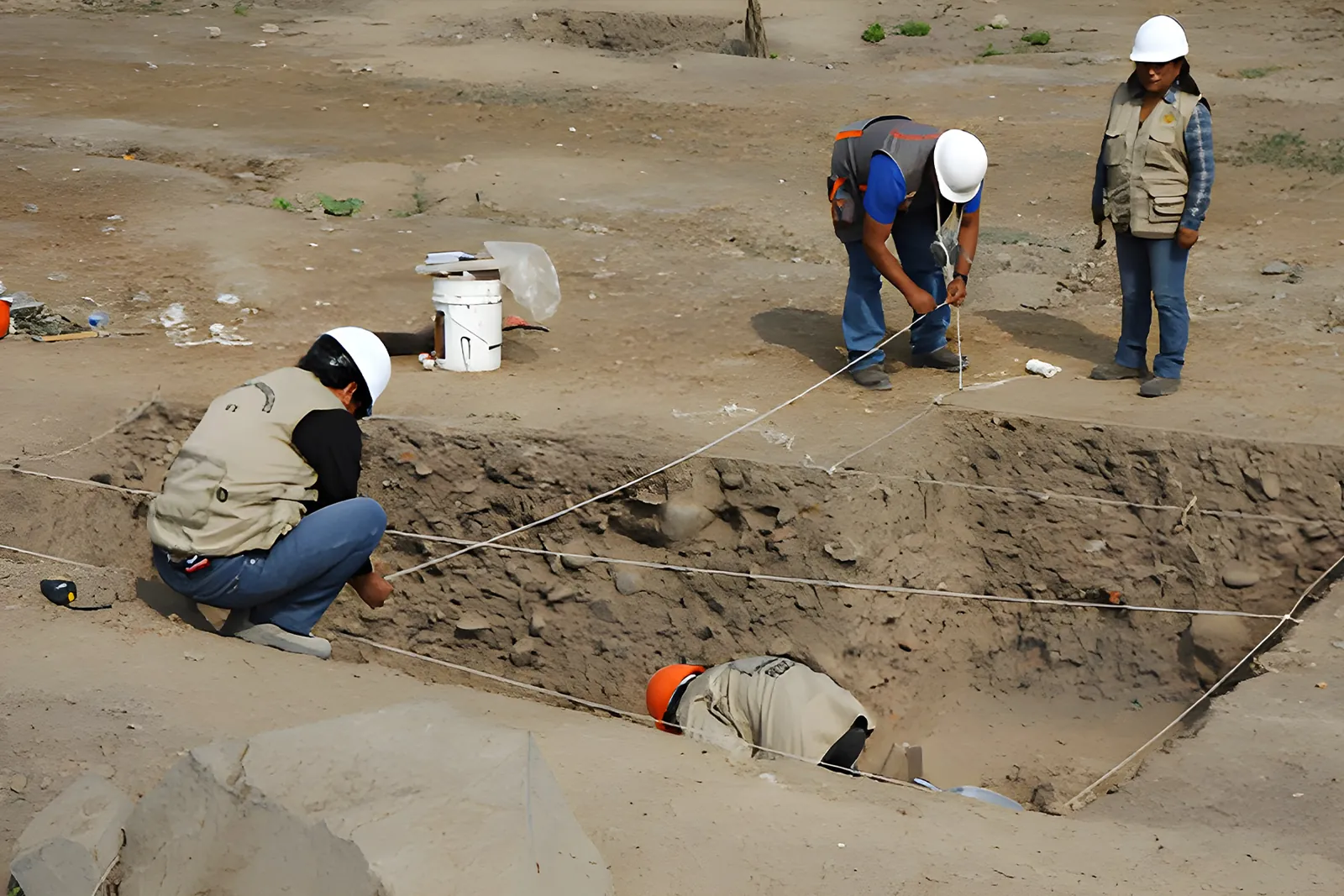
It is the Ministry authorization to carry out survey and restricted excavations within the area of an investment project. It serves to identify pre-Hispanic archaeological assets and isolated elements, delineate them, and define the impacts and mitigation measures.
When your project needs it
- When there are signs of archaeological remains in the area.
- When the subsoil must be assessed.
- As a step prior to the PRA, if it must be confirmed which evidence the works will affect.
What Laguitos Perú delivers
- A report on the presence of pre-Hispanic archaeological assets and isolated elements in the area assessed.
- The field records of the survey and of the restricted excavation.
How we work
- We review the background and the signs of remains in the area.
- We carry out the survey in the field.
- We carry out restricted excavations at the defined points.
- We record the findings and deliver the report.
Related reading: Archaeological Evaluation Projects (PEA) in Peru: what they are and why they are essential for heritage conservation (in Spanish)
Cultural heritage · 04
PMAR Archaeological Monitoring Plan
What it is
It is the authorization for archaeological support during the execution of infrastructure works that remove soil. It is preventive: it seeks to avoid, control, reduce and mitigate impacts on archaeological, historical or paleontological evidence that appears by chance in the soil or subsoil.
When your project needs it
- During works involving soil removal.
- When the works may encounter evidence by chance in the soil or subsoil.
- It is processed before Peru's Ministry of Culture.
What Laguitos Perú delivers
- The monitoring plan with the prevention, control and mitigation measures.
- Field follow-up during the works and its report.
How we work
- We review the project and the areas with soil removal.
- We define the prevention, control and mitigation measures.
- We accompany the works with field monitoring.
- We document the follow-up and its results.
Related reading: How to obtain authorization to carry out an Archaeological Monitoring Plan (PMAR) in Peru (in Spanish)
Cultural heritage · 05
PRA Archaeological Rescue Project
What it is
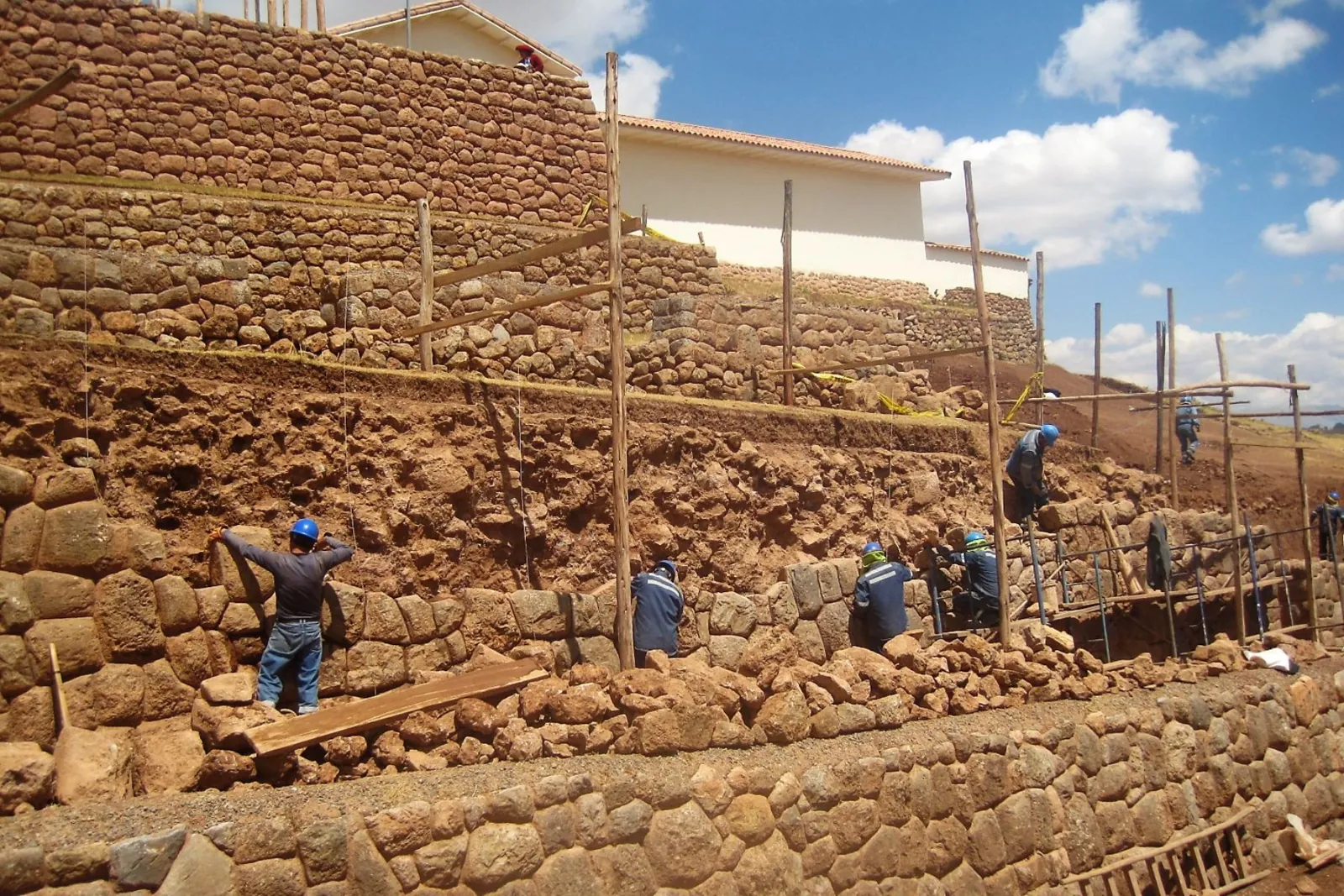
It is the authorization to excavate, record and recover pre-Hispanic or historical archaeological evidence in the area of one or more immovable archaeological assets that a work will impact, when that impact cannot be avoided for technical reasons.
When your project needs it
- When works will affect an area with archaeological evidence.
- When the prior evaluation (PEA) confirms evidence the works cannot avoid.
What Laguitos Perú delivers
- The recovery and recording of the archaeological material in the area.
- A rescue report.
How we work
- We delineate the area where the activity will take place.
- We excavate to recover the archaeological material.
- We record the recovered material.
- We deliver the rescue report.
Environmental study · 06
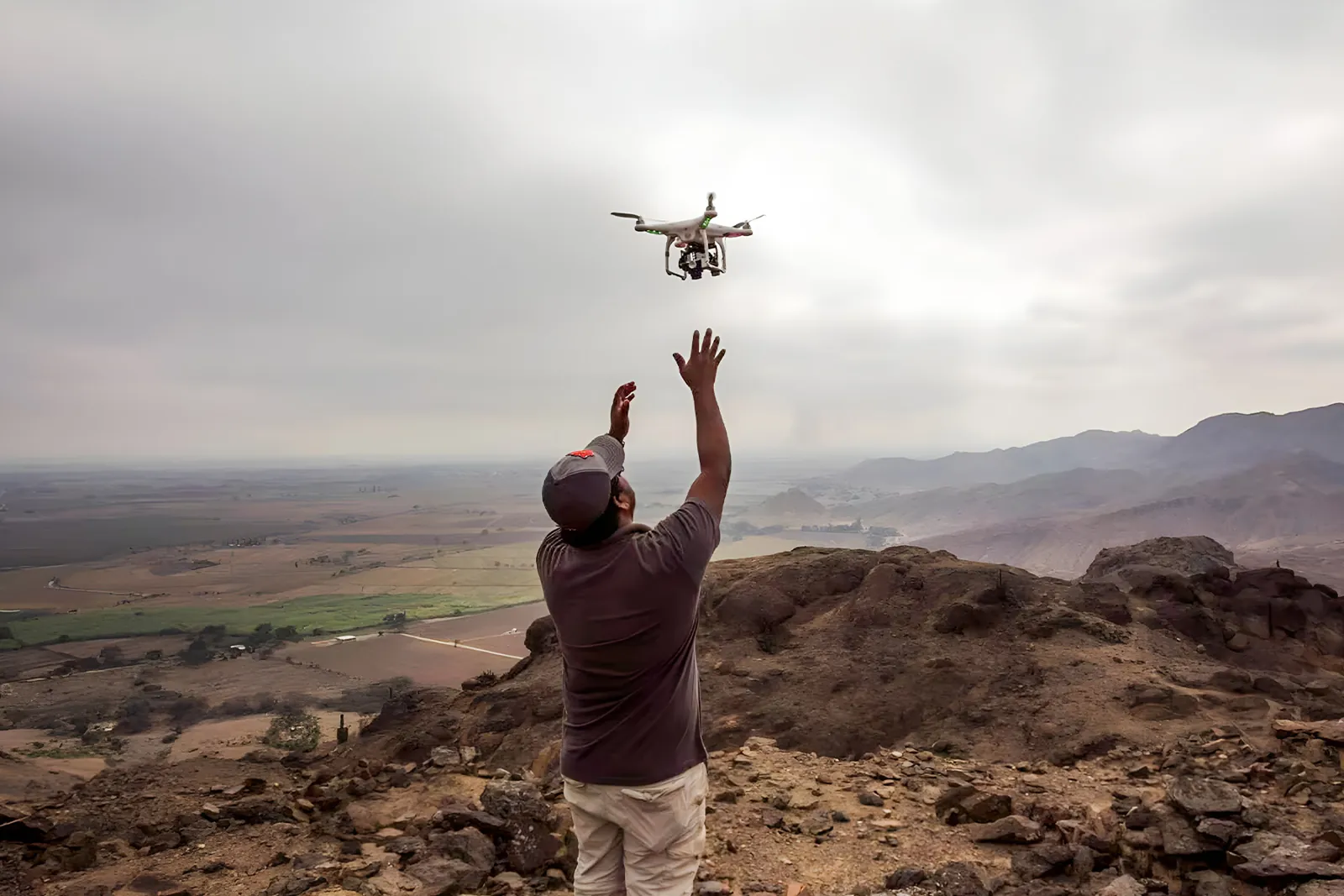
Archaeological reconnaissance for baseline
What it is
It is a field survey and historical analysis that identify the cultural heritage of the project area.
When your project needs it
- In environmental studies, to avoid work stoppages due to unforeseen finds.
- When the project needs to identify the cultural heritage of its area.
What Laguitos Perú delivers
- An archaeological reconnaissance report for the baseline of the project area.
- The record of the field reconnaissance and of the historical analysis.
How we work
- We review the historical information about the area.
- We survey the terrain in the field.
- We identify the cultural heritage present in the project area.
- We deliver the baseline reconnaissance report.
Archaeological clearance
Archaeological clearance instruments
Choose an instrument and see, animated, what is done in the field and which document you obtain: the DAS report, the CIRAS certificate, or the resolution authorizing the PEA, PMAR or PRA.
- DAS: Results Report through the DAS Platform
- CIRAS: Certificate issued by the Ministry of Culture
- PEA: Directoral Resolution; excavation by test pits
- PMAR: Directoral Resolution; monitoring during the works
- PRA: Directoral Resolution; rescue and recording
Other procedures
The other archaeological procedures in the TUPA
These are the 17 procedures and services of the Directorate General of Archaeological Heritage (DGPA), plus the DAS, which is outside the TUPA. We only show the archaeological management ones.
View the full TUPA catalogue (18)
Showing all 18 procedures and services
-
Outside the TUPA
Surface Archaeological Diagnosis (DAS)
Alternative measure to the CIRAS for using a site without prior Ministry authorization. It is prepared by a licensed and registered archaeologist.
View page of the DAS -
P01DGPA
Authorization to carry out an Archaeological Monitoring Plan (PMAR)
Support from an archaeologist during the works, to prevent and mitigate impacts on remains that appear by chance.
View page of the PMAR -
P02DGPA
Issuance of the Certificate of Non-Existence of Archaeological Remains on the Surface (CIRAS)
Certifies that, after verifying the area in the field, there is no visible archaeological evidence on the surface.
View page of the CIRAS -
P03DGPA
Authorization to carry out an Archaeological Research Project (PIA)
Allows excavation and prospection to investigate, conserve and enhance archaeological assets. Valid for up to one year.
Ask about about the PIA -
P04DGPA
Authorization to carry out an Archaeological Research Programme (PRIA)
Allows interdisciplinary research, conservation and enhancement programmes. Valid for two to five years.
Ask about about the PRIA -
P05DGPA
Authorization to carry out an Emergency Archaeological Project (PAE)
Allows urgent recovery, conservation or stabilization work on an immovable asset in imminent danger of damage.
Ask about about the PAE -
P06DGPA
Authorization to carry out an Archaeological Evaluation Project (PEA)
Allows survey and restricted excavations within a project area to identify and delineate archaeological assets.
View page of the PEA -
P07DGPA
Authorization to carry out an Archaeological Rescue Project (PRA)
Allows excavation, recording and recovery of evidence when a work impacts immovable archaeological assets.
View page of the PRA -
P08DGPA
Extension of the validity of the authorization for archaeological interventions
Extends the validity of a PEA, PRA, PMAR or PIA, at the request of the party.
Ask about about the validity extension -
P09DGPA
Renewal of the validity of the authorization for archaeological interventions
Renews the validity of a PEA, PRA, PMAR or PIA, once only.
Ask about about the validity renewal -
P10DGPA
Simplified archaeological monitoring procedure (PROMA), Reconstruction with Changes
Simplified archaeological support for works involving soil removal within the Comprehensive Reconstruction with Changes Plan.
Ask about about the PROMA -
P11DGPA
Authorization to export archaeological samples for scientific research
Allows archaeological samples to be exported for scientific analysis in foreign laboratories, for an ongoing research project.
Ask about about the export of samples -
P12DGPA
Authorization for custody of the collections obtained within archaeological interventions
Temporary custody of archaeological collections for research. Valid for up to one year, renewable each year for up to five years.
Ask about about custody of collections -
P13DGPA
Renewal of custody of the collections obtained within archaeological interventions
Renews custody of archaeological collections each year, for up to five consecutive years.
Ask about about renewal of custody -
P14DGPA
Authorization for reburial of restricted cultural property
By letter, authorizes the reburial of remains of analyzed collections in a space designated by the Ministry.
Ask about about the reburial of restricted assets -
P15DGPA
Authorization for reburial of human remains recovered within archaeological interventions
By letter, authorizes the reburial of human remains at the request of relatives, descendants or communities.
Ask about about the reburial of human remains -
S01DGPA
Search for archaeological cadastral records
Service that issues a certificate with information from the cadastre of pre-Hispanic assets, up to date as of the issue date.
Ask about about the search for cadastral records -
S02DGPA
Technical field supervision at the party's request
Service that, by means of a record, guides the execution of field work or the determination of finds in authorized interventions.
Ask about about technical field supervision
Source: TUPA of the Ministry of Culture (Resolución Ministerial N.° 000124-2025-MC, Ministerial Resolution), consulted on 24 October 2026. Processing times are the Ministry's and may vary; check the current version at gob.pe.

Each instrument protects what the land holds.
From the surface diagnosis to the rescue, we support you in every procedure before the Ministry of Culture.
Complementary services
Other services
In addition to the instruments above, Laguitos Perú offers these services.
- Rental of 4×4 pickup trucks equipped for mining
- Restoration of archaeological monuments
- Restoration and conservation of cultural property
- Delineation of archaeological sites and signage
- Analysis of archaeological material
- Archaeological advisory and anthropological studies
Frequently asked questions
Common questions before requesting a quote
Brief answers about services, procedures and quotes.
What is the difference between the DAS and the CIRAS?
The DAS does not require prior authorization from the Ministry of Culture: it is prepared and signed by an external archaeologist, licensed and registered, and the start and the Results Report are notified through the DAS Specialized Digital Platform. The CIRAS is a Ministry procedure. If the DAS concludes there are no remains on the surface, it has the same effects as a CIRAS.
How long does the Ministry take to process a CIRAS or a PMAR?
Procedures are submitted before Peru's Ministry of Culture. Ministry processing time: CIRAS, 20 business days (TUPA); PMAR, 10 business days (TUPA). These are the Ministry's times, not Laguitos Perú's, and they may vary: check the current version at gob.pe.
When do I need a PEA and not just a DAS?
The PEA is used when there are signs of archaeological remains or the subsoil must be assessed: it authorizes survey and restricted excavations to identify and delineate the assets in the area. The DAS, by contrast, is a surface diagnosis that allows using a site without prior authorization.
What happens if my works will affect an area with archaeological evidence?
In that case, the instrument indicated is the Archaeological Rescue Project (PRA), which excavates, records and recovers the evidence in the area that the works cannot avoid. If the works remove soil and there are no known signs, the Archaeological Monitoring Plan (PMAR) accompanies the execution to prevent and mitigate impacts.
What is the archaeological reconnaissance for baseline used for in environmental studies?
It is a field survey and historical analysis that identify the cultural heritage of the project area. It is included in environmental studies to avoid work stoppages due to unforeseen finds.
What information do I need to request a quote?
Tell us the stage of your project, its location (region, province or district) and the type of work or activity planned on the property. With that information we will propose the study route and the team to carry it out.
Contact
Does your project need an archaeological study?
Tell us the stage and the location. We will propose the study route and the team to carry it out.
- Mobile / WhatsApp+51 982 707 015
- Emailadministracion@laguitosperu.com
- AddressAv. CND Torres Kayser A 505
- HoursOffice: Monday to Friday, 8:00 AM to 5:00 PM · Online support: 24 hours